
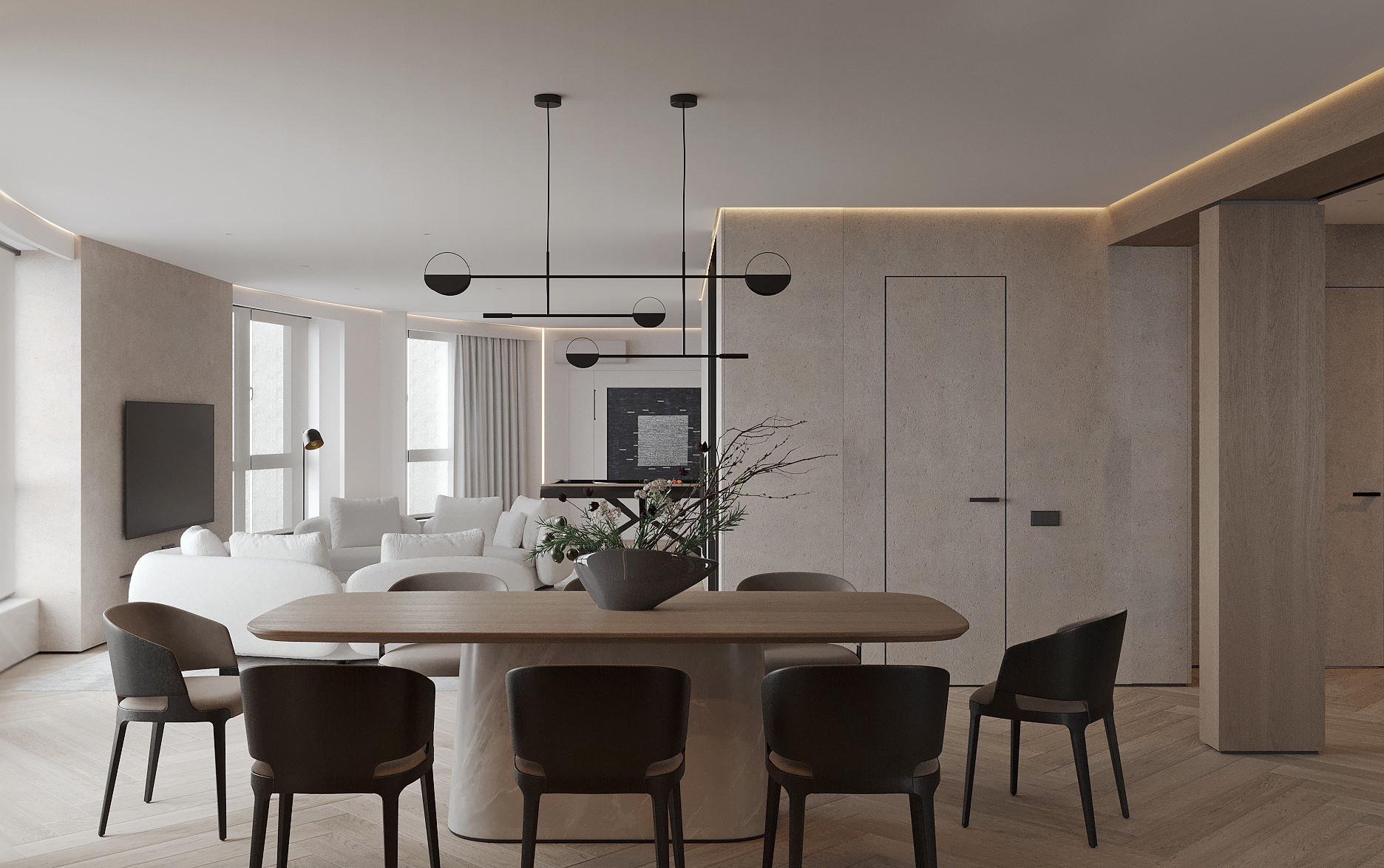
TOP 7 Key Questions for Meaningful Interior Design
Modern interior design is more than just a beautiful picture on social media. It is a complex system of solutions that impacts daily comfort, functionality, maintenance, and even future resale value. When clients approach CITEK — a boutique studio specializing in interior design, architecture, and product design — we always ask several essential questions. Without answering them, it is impossible to initiate a high-quality design process. These answers form the foundation for the design of an apartment, a house, or any residential space. This analytical approach allows us to provide professional interior design services where every square meter works for the owner.
TOP 7 Questions from CITEK Studio:
-
What do we have? (Technical condition of the property, utility networks, and structural features)
-
What are we doing? (Purpose of the property: primary residence, rental, or investment)
-
Where are we doing it? (Context: location, views, orientation, etc.)
-
Who are we doing it for? (Residents: their age, personality, and family structure)
-
What are the needs? (Functionality: number of zones, storage spaces, workspaces)
-
What are the priorities? (Life scenarios: your morning routine, how you host guests, how you relax)
-
What are the tastes? (Aesthetics and the visual concept of the future space)
Question 1 — What do we have? (Technical Audit and Site Analysis)
What is the essence of this question?
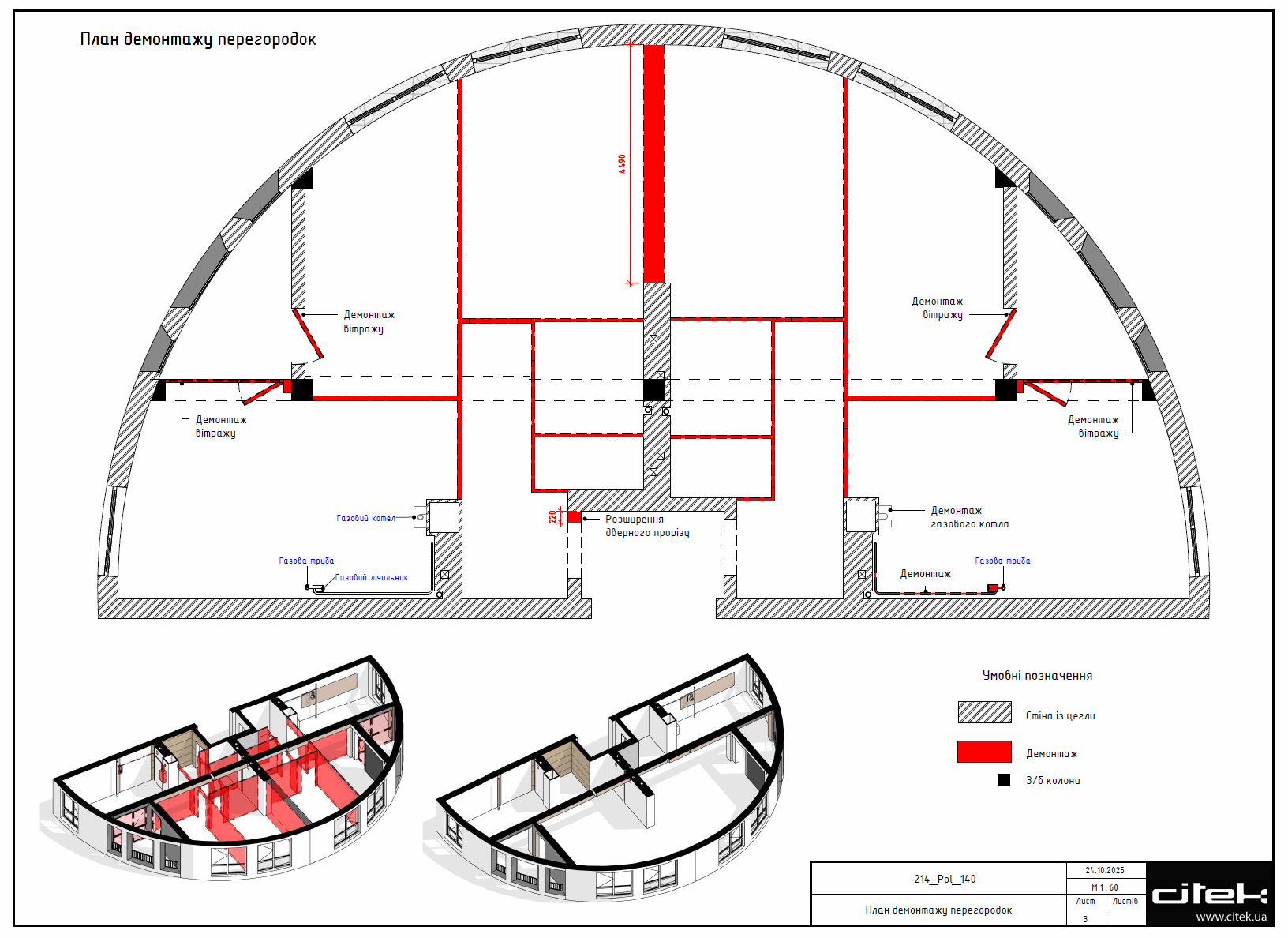
We aim to obtain the most complete and objective assessment of the property before the first line is even drawn. This is a critical stage because interior design is not just about aesthetics, but also precise engineering. We collect data in the following areas:
-
Geometry and Volumes: Detailed floor area, actual wall geometry (detecting non-perpendicular angles), and floor-to-ceiling heights.
-
Structural Scheme: We identify the number of rooms and analyze load-bearing structures, columns, and beams that cannot be removed. This determines the boundaries of future remodeling.
-
Spatial Orientation: Which floor the property is on and the direction the windows face (cardinal directions). This directly affects insolation (natural light) and the selection of the color palette.
-
Engineering Potential: The condition and entry points of utilities — water supply, sewage (levels and riser locations), existing heating systems, ventilation possibilities, and allocated electrical power.
-
Legal Status and Condition: Is it a new shell-and-core construction or a secondary market property with layers of previous renovations?
-
Regulations and Constraints: We study specific requirements from the developer or homeowners’ association (HOA), which may restrict changes to the facade, AC unit installations, or the relocation of “wet zones.”
The answer to this question provides a comprehensive understanding of the object: its key parameters, unique characteristics, hidden features, and objective limitations. The main goal at this stage is to gather a full array of information for further deep analysis and error-free design. We meticulously record everything: from the number of rooms and spatial orientation to the state of engineering networks and the requirements of managing organizations.
How we implement this at CITEK
In our practice, modern interior design is always based on the “measure twice, cut once” principle. Our approach includes several levels of data collection:
-
In-depth Briefing and Questionnaires: We conduct a series of meetings with clients to fill out a detailed questionnaire. This helps uncover needs that may not be obvious at first glance.
-
Documentation Review: We obtain part of the information directly from the client — typically technical documentation, floor plans from the developer, and technical specifications.
-
Field Research: The next step is a visual inspection, total photo-documentation of every corner, and professional on-site measurements using high-precision equipment.
-
Expert Analysis: The information gathered becomes the foundation for designing the apartment or house. It provides a clear answer to the question “what are we dealing with?” and becomes part of the input data that minimizes risks during construction.
Additionally, our studio offers a separate service — Property Audit. Based on the data collected at this stage, we provide professional design advice even before you purchase a property. We help clients make a strategically sound decision: whether to invest in a specific apartment or choose another option that might be easier and more cost-effective to implement. This way, you know the real cost of design and subsequent renovation before major expenses begin. If you are planning an investment, it is worth ordering a design consultation (or at least a preliminary audit) in advance — this will protect you from buying a property with “inconvenient” columns or insufficient electrical capacity.
Question 2 — What are we creating? (Purpose and Strategy of the Property)
What is the essence of this question?
The exact same floor area, identical layout, and identical interior design of a house or apartment can function in completely different ways depending on the purpose of use. It is critical for us to define the property’s objective, as the same apartment can serve as:
-
A permanent family home: where the priorities are coziness, deep personalization, and the longevity of every solution.
-
Temporary housing: (for example, a “weekend pied-à-terre” in a major city), where the focus is on compactness and functionality.
-
An investment property for rent: where the main goals are a quick return on investment (ROI), versatility, and high durability.
-
A property for resale (flipping): a project designed to highlight the property’s advantages to the widest possible range of buyers.
-
A “life-stage” home: for instance, a student’s first apartment during university or a downsized home for an elderly couple.
Answering this question provides a clear understanding of the future space’s parameters. Each of these scenarios requires fundamentally different approaches. Modern interior design is not a universal template; it is a response to a specific task. Depending on the purpose, the durability of materials, flexibility of planning solutions, the volume of investment in finishes, and the depth of personalization vary significantly. If you decide to order an interior design, the first step is an honest answer to the question: “What function should this space perform now and in 3–5 years?”
The CITEK Mindset
At our studio, design thinking operates on an ironclad principle: if we do not fully understand “why” an interior is being created, it is impossible to correctly answer “how” to implement it. We fundamentally do not design “universal interiors” that suit everyone and no one at the same time. We create a product for a specific task, and it is the understanding of the property type that determines the final result, its aesthetics, and its viability.
Practical Examples of Our Approach:
-
Investment Real Estate (Rental): Here, we apply a “rational quality” strategy. Finishes and furniture do not necessarily have to be premium or excessively expensive—which significantly affects the overall interior design price and renovation costs. However, they must be extremely high-quality and durable, ensuring the property can function for years without needing cosmetic repairs.
-
Furnishing: We are convinced that for a rental apartment, it is not necessary to buy a sofa from a famous Italian brand. Instead, we look for solutions where structural quality and anti-vandal upholstery properties come first. The operational requirements for such furniture are much higher than in private housing, where owners tend to treat items more carefully.
-
Flexibility of Solutions: Depending on the type of property, our implementation approaches can change radically. In a private home, we can afford complex decorative solutions, while in investment projects, we focus on ergonomics and liquidity.
Professional interior design services from CITEK are, above all, about creating a strategy that works for your goal. We help you find the exact balance between investment and results that is required in your specific case.
Question 3 — Where are we doing it? (Context and Location)
What is the essence of this question?
This is a question about the “living environment,” which extends far beyond the front door. We are interested in the context in which the property exists, as apartment interior design should be a harmonious continuation of its location. We analyze the following in detail:
-
Geography: The specific district and city, which determine the overall pace of life.
-
Logistics: Transport accessibility, proximity to the subway, major highways, or public transport stops.
-
Infrastructure: Nearby parks, schools, shopping centers, gyms, and medical facilities.
-
Social Landscape: The neighborhood community and the status of the development (social environment).
-
Sensory Load: The view from the windows (city skyline vs. a neighboring wall), street noise levels, and the amount of natural light entering the premises.
The answers to these questions provide us with comprehensive information regarding the property’s placement. Understanding the context allows us to account for external factors during the design process, ultimately making the client’s life significantly more comfortable. An apartment in a historic center and an apartment in a modern residential suburb are two different worlds with different lifestyles, even if their square footage is identical.
A clear example: If we are designing a home next to a large shopping mall, the client usually doesn’t need to stock up on massive amounts of groceries — a standard 600 mm wide refrigerator is sufficient. However, if the store is far away and residents plan weekly shopping trips, we must allocate space for a side-by-side system or an additional freezer.
How Context Defines Design Solutions at CITEK
We believe that modern interior design should increase the property’s capitalization. Understanding the location directly influences the strategy we offer the client:
-
Budget Strategy: Context often dictates the feasibility of expenses. Logistically, it makes sense to invest less in renovating an apartment on the outskirts than in a premium residential complex in the center. We help optimize the price of interior design and implementation so that it aligns with the market value of the location.
-
Investment Appeal: Transport accessibility and developed infrastructure become key selling points for future resale. We highlight these advantages through smart planning solutions.
-
Rental Potential: The social environment and the status of the area directly affect rental rates. By offering interior design services, we adapt the style to the demands of the target audience in a specific neighborhood.
-
Managing Strengths and Weaknesses: We make a beautiful view the focal point of the interior (e.g., through furniture orientation). Conversely, we compensate for high noise levels or insufficient lighting with additional soundproofing and complex lighting scenarios.
For families with children or people working remotely, these nuances are decisive. Therefore, before you order interior design, we study the “DNA” of your location together with you to ensure every decision inside the apartment is justified by external circumstances.
Question 4 — Who are we doing it for? (Resident Profile)
What is the essence of this question?
We are convinced: house or apartment interior design is primarily a story about people, not square meters. A space for one person and a space for a large family differ not just in style or wall color, but in the very logic of daily life. To create the ideal environment, we need to gather a comprehensive dataset:
-
Number of residents: Family composition today and, equally important, the perspective for the next 5–10 years.
-
Demographic profile: Age, gender, and individual characteristics of each family member.
-
Children: Their number, ages, and hobbies. Are there plans for family expansion in the near future?
-
Pets: Presence of pets, their habits, sizes, and needs.
-
Hospitality: How often do relatives or friends visit, do they stay overnight, and what kind of zone is required for this?
Design thinking forces us to think not in the category of “how it looks today,” but “how this space will adapt to changes in your life.” We analyze family development dynamics to ensure your modern interior design remains relevant for many years to come.
Clear examples: The arrival of a child can become a real challenge for an apartment’s functionality if a nursery or the possibility of transforming an office isn’t planned in advance. We always consider the gender and age of children, as the needs of an infant, a school-age child, and a teenager differ drastically. The same applies to pets: the project should include a place for rest, a feeding area, and, for example, a technical “paw-wash” station to maintain the cleanliness of the entire home after walks.
Why is this critically important?
All the needs of future residents must be integrated into the project at the sketching stage. When you decide to order interior design, you are primarily purchasing a script for your own comfort.
-
Error Prevention: It is much cheaper to provide for an extra bedroom or bathroom on paper than to try to remodel a finished apartment two years later.
-
Individualization vs. Compromise: If needs are not considered in advance, any subsequent decision will be a forced compromise. Instead of a convenient built-in wardrobe, a random chest of drawers will appear, cluttering the hallway. Instead of an ergonomic sleeping place for guests, an uncomfortable sofa bed in the living room.
-
Rational Interior Design Pricing: A project thought out from the start allows you to avoid chaotic expenses in the future. You invest in solutions that work for you, rather than fixing what became inconvenient.
Professional interior design services from CITEK studio aim to make every resident — from the head of the family to the smallest cat — feel “at home” from the very first minute. We create a personalized ecosystem where the architecture of the space adapts to your lifestyle, not the other way around.
Question 5 — What are the needs? (Functional Requirements and Brief)
What is the core of this question?
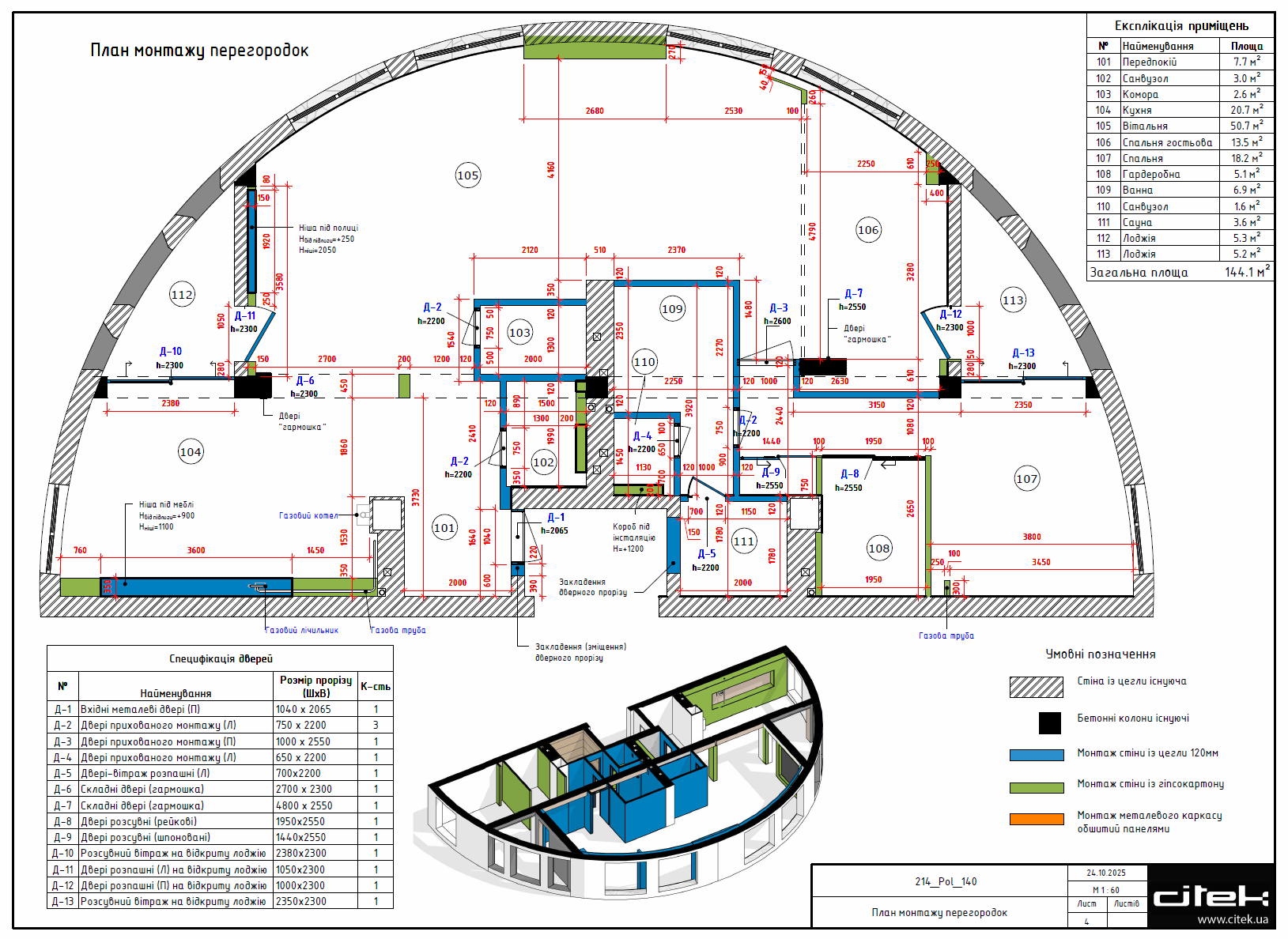
At this stage, we move from the residents’ profile to a specific list of rooms and systems. It is essential for us to gather and systematize the following information:
-
Living Space: The desired number of bedrooms, children’s rooms, home offices, or living areas.
-
Technical and Utility Areas: The need for walk-in closets, storage rooms, laundries, guest bathrooms, or server rooms.
-
Zone Specifications: Detailed requirements for each location — from a kitchen island to the layout of a workspace.
-
Engineering Complexity: Requirements for air conditioning, heat recovery ventilation (HRV), water filtration systems, and the level of automation (Smart Home, lighting scenarios, multi-room audio, etc.).
The answer to this question forms a clear Technical Brief for our studio to develop the interior design of the apartment or house. This document formalizes the client’s expectations and transforms abstract dreams into a professional roadmap for design. Without a detailed understanding of these needs, it is impossible to calculate the real interior design cost, as the complexity of engineering systems directly impacts the implementation budget.
How we do it at CITEK
In our studio, the process of gathering requirements is not just a formality but an in-depth interviewing process. We obtain answers through direct communication and the thorough completion of a professional design brief.
-
Data Synthesis: Combining the information about the property (Question 1) and the context (Question 3), we overlay your wishes. This allows us to understand how well the client’s expectations correlate with the technical possibilities of the space.
-
Time as an Investment: We always remind our clients: be prepared to dedicate time to this stage. Your involvement is a guarantee that the final result will 100% match your expectations. Modern interior design does not tolerate haste during the planning phase.
-
Functional Logic: We analyze the interdependence of zones. For example, the presence or absence of a balcony drastically changes the approach to designing utility areas. If there is no balcony, we will certainly design a full-scale laundry area with a dryer or a built-in drying cabinet to avoid the clutter of a portable drying rack in the middle of the living room.
-
Engineering Focus: We help the client decide on the level of automation before the drafting begins. This allows us to pre-plan the necessary niches, shafts, and panels, keeping the interior aesthetics clean and seamless.
If you are planning to order interior design services, remember: the more detailed you describe your daily habits at this stage, the fewer compromises await you after moving in. Professional interior design services from CITEK are, above all, about creating a “smart” space where every outlet and every shelf has its own logical justification.
Question 6 — What are the priorities? (Life Scenarios and Zone Hierarchy)
What is the essence of this question?
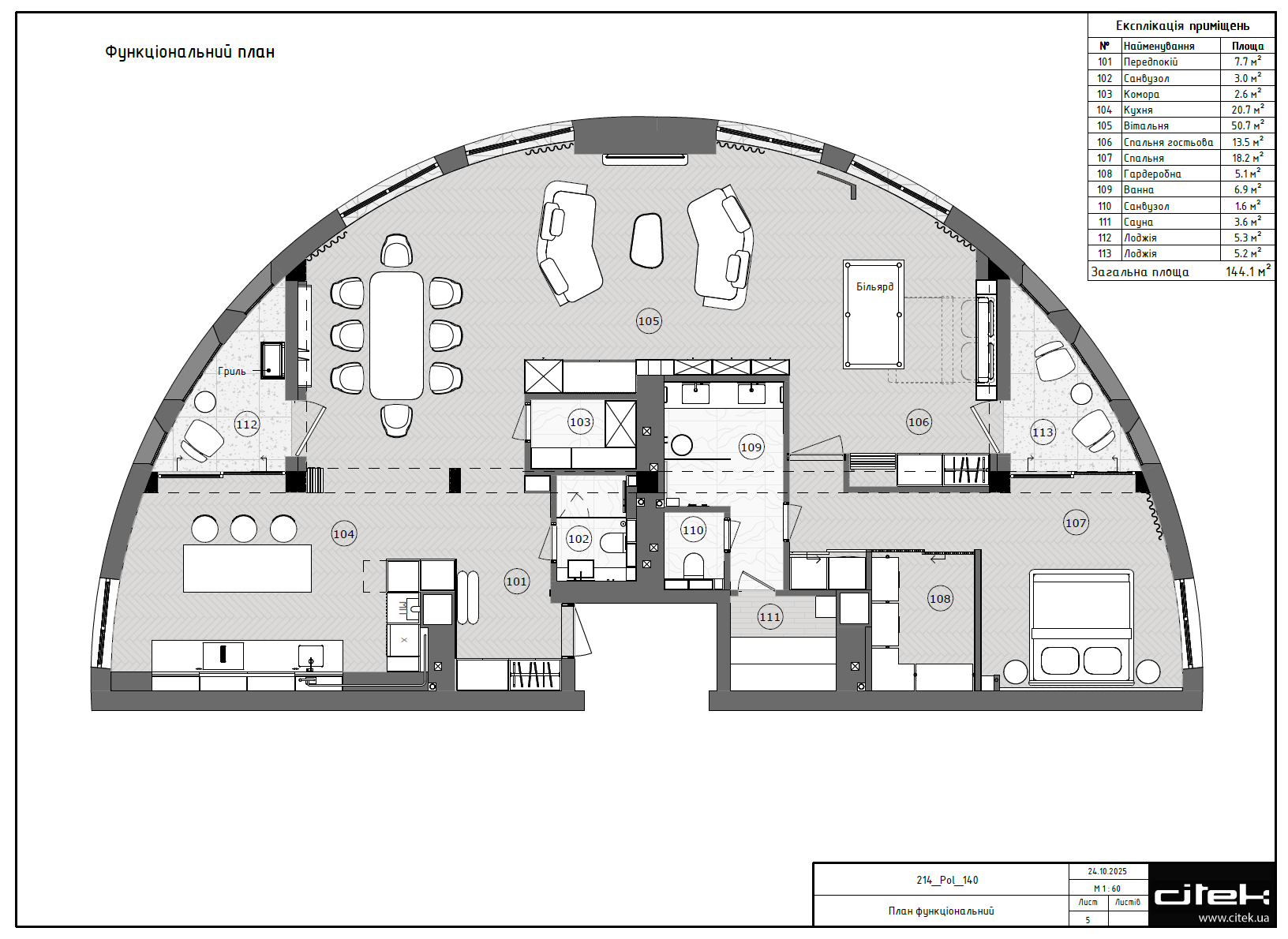
While Question 5 defined what exactly should be in the home, Question 6 determines how it will be. Priorities act as a filter through which we pass every square meter. They directly influence:
-
Space Allocation: which zone receives maximum space and which remains compact.
-
Investment Strategy: where to invest significantly (e.g., a professional-grade kitchen or an ultra-comfortable sofa) and where to save without compromising quality of life.
-
Technical Complexity: where complex engineering or decorative elements are required, and where minimalism is more appropriate.
-
Visual Accents: what will become the “heart” of the home and the main focal point.
This is a fascinating stage that reveals the true values of the residents. We are interested in real-life habits: How often do you cook at home (will it be a kitchen island for culinary shows or a sleek coffee niche)? How do you host guests (a formal dining room or a lounge area for parties)? How do you work and relax? Without a clear hierarchy of priorities, modern interior design risks becoming “average” — looking good in photos but being impractical in daily life.
How we work with priorities at CITEK
Design without priorities lacks a soul; it is not personalized. At CITEK studio, we begin by deeply analyzing the lifestyle of each client. Often, these priorities are not obvious even to the clients themselves, so our task is to uncover and reflect them in the project.
-
The Geometry of Priorities: If needs determine the presence of zones, then priorities determine their size. Our main task is to intelligently redistribute the available area.
Example: Imagine a studio apartment where we need to place a kitchen, a dining area, and a living room. If the clients rarely cook but love board games and movie marathons, we intentionally dedicate the majority of the space to the living area and a large table. The kitchen, in this case, becomes compact with a basic set of appliances. This is true apartment interior design created specifically for the person.
-
Process Modeling: We don’t just draw walls; we model your future mornings, evenings, and holidays. This allows us to account for the wishes of all family members while maintaining the flexibility of the space.
-
Expert Guidance: It is precisely to create a home where every inch aligns with your values that you should hire professional interior design services. We help you avoid wasting your budget on “trendy” solutions you don’t need, and instead invest in what truly brings you joy.
Defining priorities allows us to provide the highest quality interior design services. We ensure that the price of interior design is justified by every decision made. It is this deep and conscious approach that brings clients to our boutique studio, CITEK.
Question 7 — What are your tastes? (Aesthetics & Visual Concept)
What is the essence of this question?
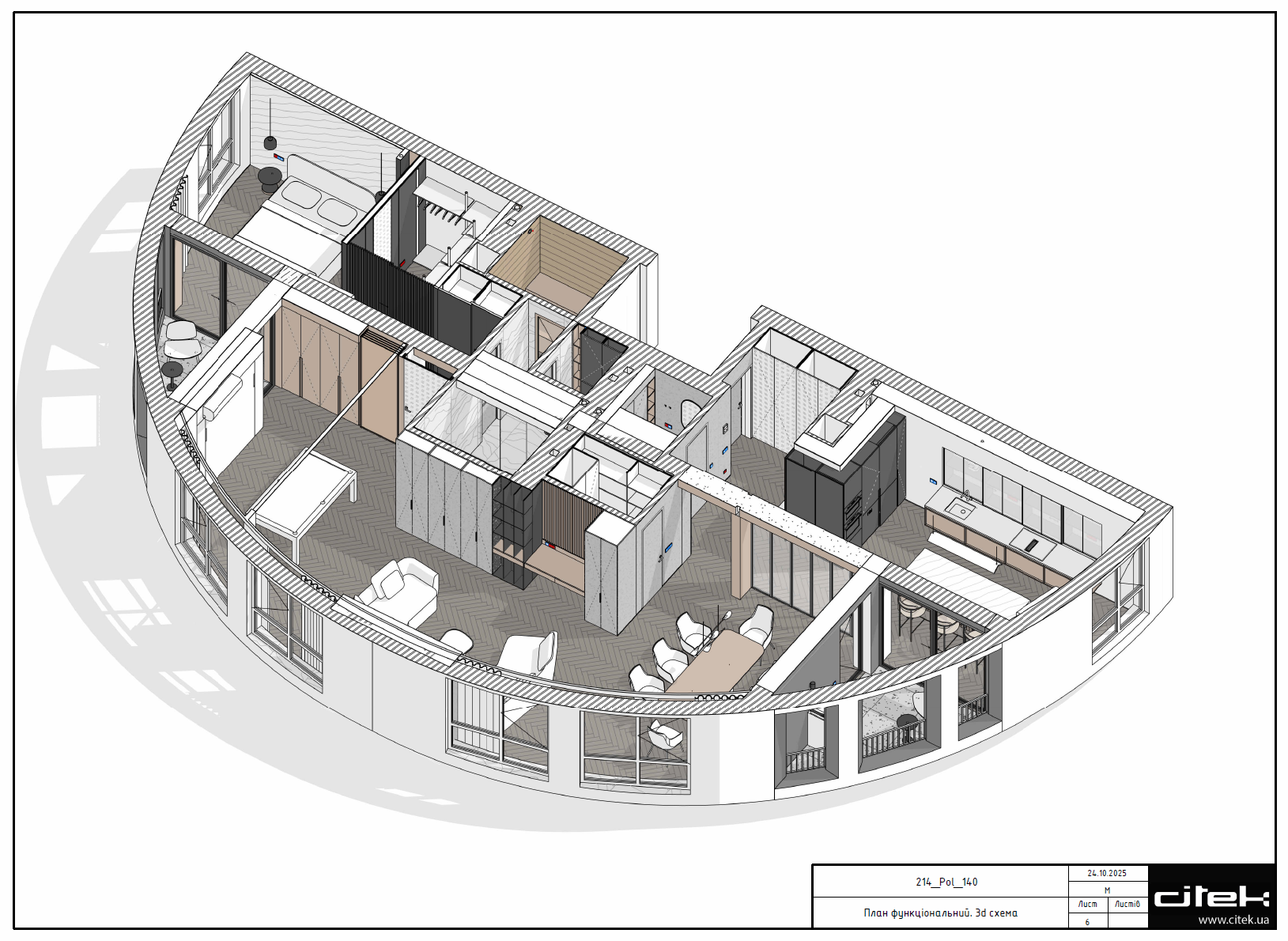
Once the technical foundation and functional priorities are set, we move on to creating the “visual soul” of the project. We explore your aesthetic benchmarks through several key lenses:
-
Materials: What feels pleasant to the touch? Do you prefer wood, stone, metal, or textiles?
-
Textures: Do you prefer seamless smoothness or the tactile roughness of natural surfaces?
-
Color Palette: What resonates with you more — cozy, dark tones or airy, light-filled interiors?
-
Spatial Feel: Are you looking for a sense of intimacy and seclusion, or openness and minimalism?
-
Stylistic Directions: Which visual images inspire you and resonate with your inner world?
Answering these questions allows us to do more than just “paint the walls.” We create an atmosphere that supports your emotional well-being every day. This is the final stage that transforms modern interior design into a true reflection of your personality.
How we approach aesthetics at CITEK
At our boutique studio, we follow a distinct philosophy: we do not engage in blind “styling” according to fleeting trends. Our goal is to shape a unique style tailored to the individual and their lifestyle.
-
Naturalness as a Core: We prioritize natural materials and organic colors. This makes the interior “timeless.” If the functional base of the project is designed correctly, visual details can be easily complemented or updated over time without losing the integrity of the space.
-
Budget Management through Materials: An interesting observation from our practice is that the same functional layout can lead to vastly different implementation budgets. The price of interior design and its realization depends heavily on the selected level of finishing. For example, opting for natural hardwood flooring instead of laminate, or decorative plaster instead of paint, significantly elevates the property’s status and the cost of work. We help the client find the perfect balance between their desired aesthetics and financial capabilities.
-
Function is Paramount: We firmly believe that a well-executed apartment layout, based on the principles of design thinking, will make your home comfortable and convenient under any circumstances. Even with minimalist finishes, such an interior will work for you, whereas expensive materials can never rescue poor ergonomics.
A Crucial Piece of Advice for Future Homeowners
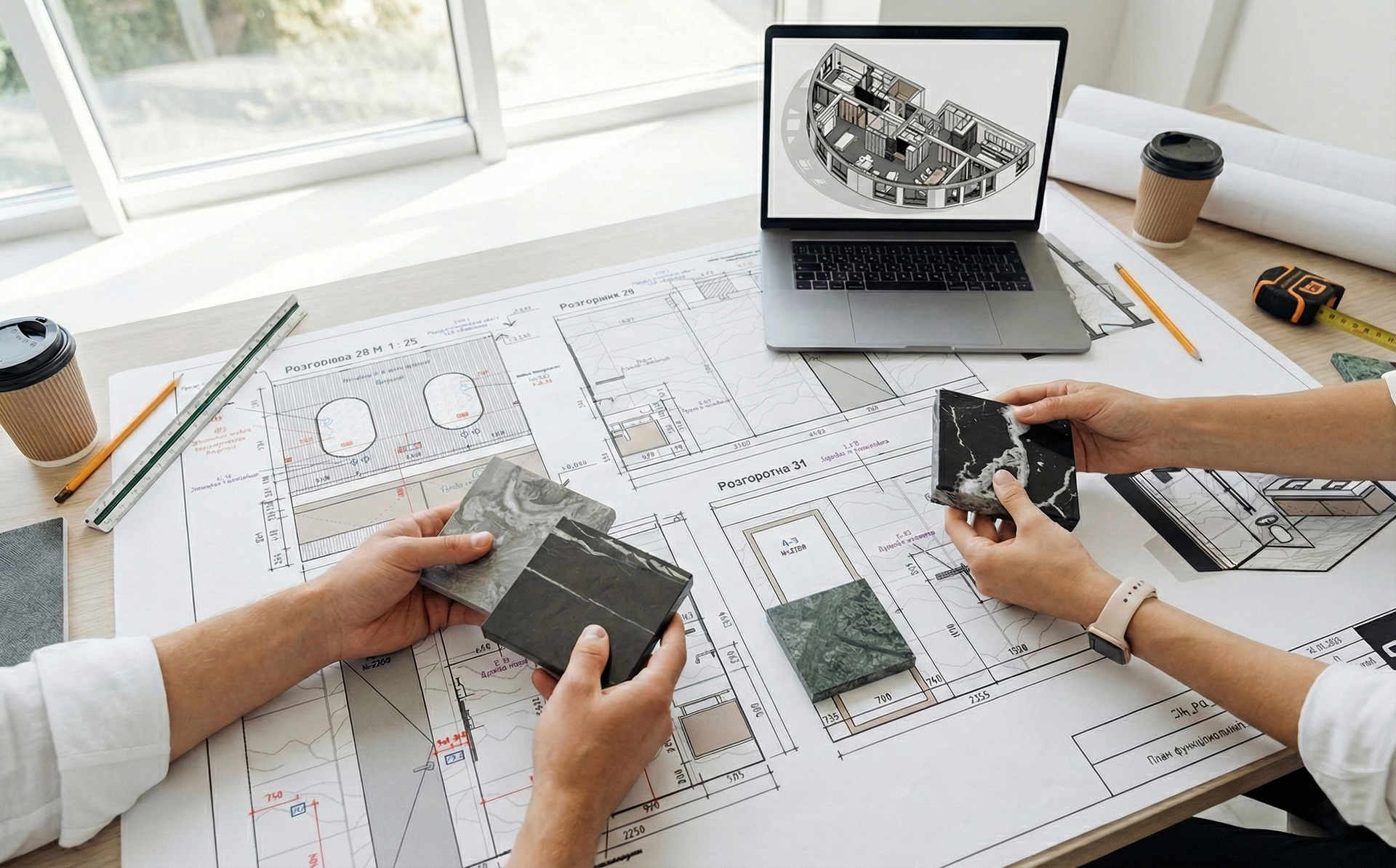
When you decide to order interior design services for an apartment or a private house, it is critical to choose more than just “artists.” You need a team that thinks systematically. Aesthetics without logic quickly lose their appeal in daily life, whereas a well-thought-out system serves you for decades. At CITEK studio, we don’t look for shortcuts. Instead, we work through a proven design-thinking methodology:
-
Gathering Comprehensive Input: No detail regarding the object’s technical condition goes unnoticed.
-
Analyzing Context and People: We immerse ourselves in your environment and lifestyle to understand the genuine needs of every family member.
-
Forming Spatial Logic: We create an ergonomic foundation and life scenarios where every square meter has a clear purpose.
-
Creating the Visual Identity: Only after the function is perfected do we wrap it in flawless aesthetics and natural materials.
We are convinced: modern interior design is not about the designer’s self-expression; it is about creating a space that works exclusively for its owner. Our approach allows us to accurately forecast the interior design cost and avoid unpleasant surprises during implementation.
Ready to create a space that elevates your quality of life?
Don’t put your comfort on hold. Entrust your future home to professionals who blend architectural precision with deep client empathy. Professional interior design services by CITEK guarantee that your home will be not only beautiful but truly meaningful.
If you are ready to commission an interior design that combines in-depth analysis with impeccable taste, we look forward to welcoming you to our studio.
Sincerely, Andrii Mohyla Creative Director, Citek Studio.
CITEK — we don’t just build walls, we create meaning!
